
On the label
- The CDC says adults need at least 2 days of muscle-strengthening activity each week that work all major muscle groups.
- NIA says one set of 8 to 12 repetitions of each exercise is effective, although two or three sets may be more effective.
- NIA advises not working the same muscle group on two days in a row.
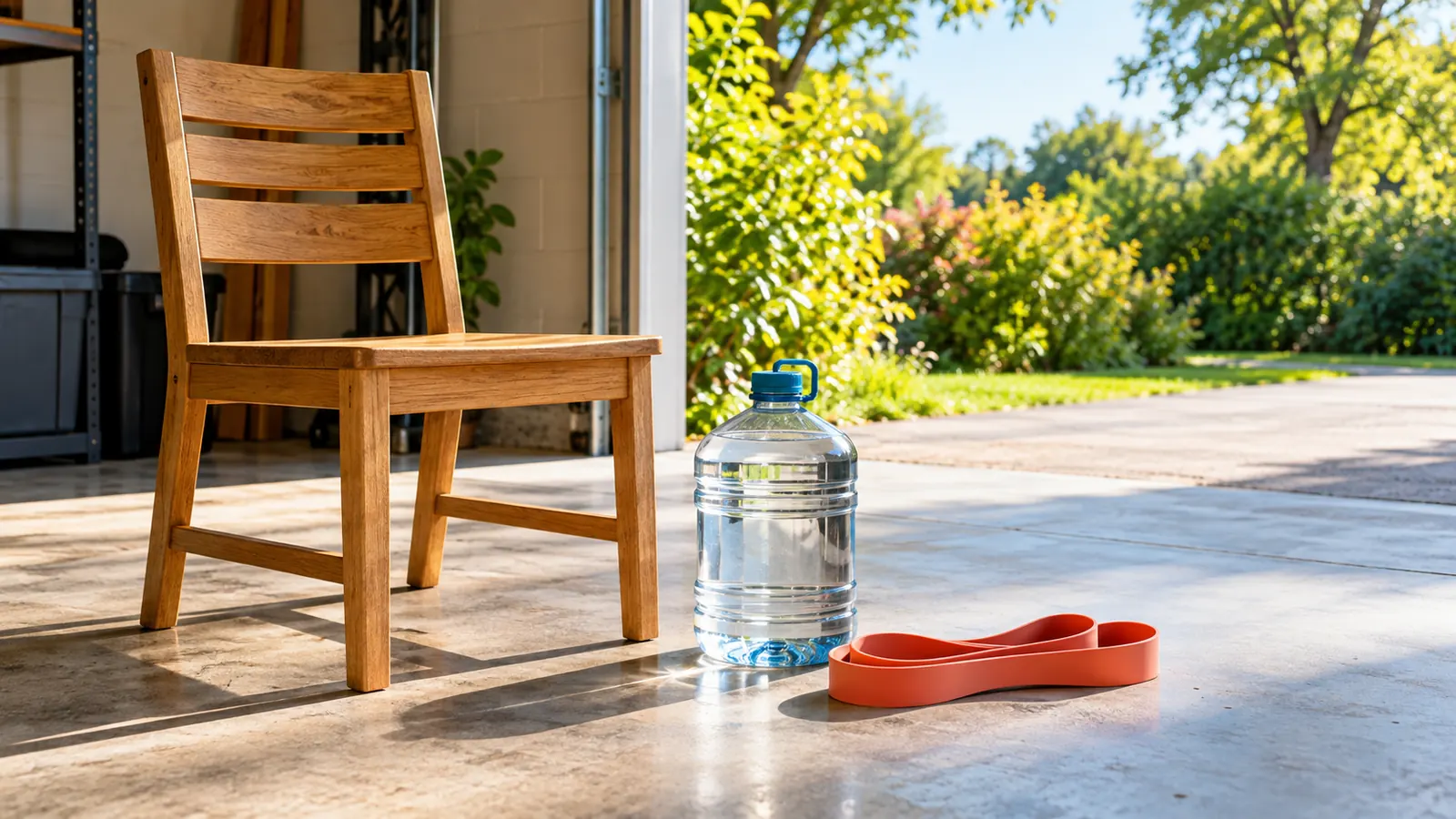
Strength training has an image problem. It sounds like barbells, protein shakes and a membership card. The federal guidance asks for something much smaller: muscle-strengthening activity on 2 or more days a week that works the major muscle groups. Your own body weight, a chair and a staircase cover most of it.
What counts as strength training
The National Institute on Aging defines muscle-strengthening exercise, also called strength or resistance training, as activity that makes your muscles contract, often to lift something against the pull of gravity. The Physical Activity Guidelines for Americans add that strength can be built using elastic bands or body weight for resistance, with push-ups as an example. Climbing stairs, shoveling snow and carrying heavy loads such as groceries are also on the guidelines’ list of muscle-strengthening activities.
The CDC asks adults to work all the major muscle groups: legs, hips, back, abdomen, chest, shoulders and arms. NIA uses the same list.
Why it is worth two sessions a week
NIA says muscle-strengthening improves physical function, helps you stay independent and makes everyday tasks easier, such as getting up from a chair, climbing stairs and carrying groceries. It is also key to keeping existing strength, slowing the loss of muscle mass and helping prevent falls. The CDC notes that muscle strengthening is important for older adults who lose muscle mass and strength with age, and that slowly increasing weight and repetitions brings more benefit at any age.
The rules in one table
| Question | Answer | Source |
|---|---|---|
| How often? | At least 2 days a week | CDC, Physical Activity Guidelines |
| Which muscles? | Legs, hips, back, abdomen, chest, shoulders, arms | CDC, NIA |
| How many reps? | One set of 8 to 12 per exercise; two or three sets may be more effective | NIA |
| How hard? | At least moderate effort, until another repetition would be difficult | NIA |
| Rest? | Do not work the same muscle group two days in a row | NIA |
| Beginner? | Start without weights or bands until the movements feel comfortable | NIA |
No-gym swaps for gym machines
- Leg press: chair squats, sitting down and standing up without your hands.
- Chest press: wall push-ups, then counter push-ups, then floor push-ups from the knees.
- Shoulder press: lift two filled water bottles or a backpack with books overhead.
- Rowing machine: lean on a sturdy table and pull a loaded backpack toward your ribs, one arm at a time.
- Leg curl and hip work: lie on your back, feet flat, and lift your hips off the floor.
- Abdominal machine: a plank on the forearms, or on the hands with knees down.
- Stair climber: real stairs, holding the rail.
Arm circles, leg raises, push-ups, planks, squats and lunges are all on NIA’s list of exercises that use body weight as resistance. Resistance bands are the one purchase worth considering; NIA describes them as stretchy elastic bands that come in varying strengths, which makes progress easy to measure.
A two-day plan
Day A (for example, Monday)
- Chair squats: 8 to 12
- Wall or counter push-ups: 8 to 12
- Backpack rows: 8 to 12 each arm
- Plank: hold for a few slow breaths, rest, repeat once
Day B (for example, Thursday)
- Step-ups on the bottom stair: 8 to 12 each leg
- Overhead press with bottles or backpack: 8 to 12
- Hip lifts on the floor: 8 to 12
- Standing calf raises holding a chair: 8 to 12
The split follows NIA’s advice to avoid working the same muscle group on two consecutive days. Both days together hit every group on the CDC’s list. Start with one set of each; once 12 repetitions feel manageable, add a second set or move to a harder version.
Tip: Do the plan in front of something you watch anyway. One episode of a show is long enough for a set of every exercise with rest in between, and the show becomes the cue.
Doing it safely
- Warm up with lighter versions of the exercise first, as NIA suggests.
- Breathe out during the effort and in as you relax; NIA says not to hold your breath.
- Listen to your body. NIA warns that overdoing strength exercise can cause exhaustion, sore joints and muscle pain or injury.
- If you are unsure about a movement, NIA suggests asking your doctor or a physical therapist, or booking a session with a trainer to learn proper form.
How to get stronger over time
NIA says gradual increases in the amount of weight, the number of sets or repetitions, or the number of days a week will result in stronger muscles. At home, the lazy version of progression is to change the angle: wall push-ups become counter push-ups, chair squats become squats to a lower chair, a plank on the knees becomes a full plank. The Physical Activity Guidelines’ general rule applies here too: increase gradually, because the risk of injury grows with the gap between what you usually do and what you try.
Strength days pair well with short aerobic sessions. For a mixed routine that fits into 10 minutes, see The 10-Minute Home Workout: No Equipment, No Excuses, and for the weekly totals behind all of this, How Much Exercise Do Adults Need? The Federal Numbers, Explained. If you have a chronic condition, the CDC recommends asking your doctor which types and amounts of activity are right for you.